
Abyssal Soul - Card Roguelike
ChillyRoomCard
4.553.00 Reviews
- Version
- 1.0.4
- Installs
- 100.00K
- Age Rating
- Everyone 10+
Screenshots

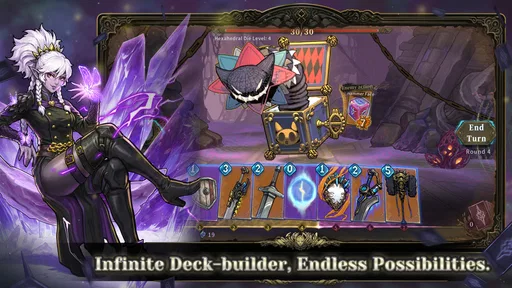
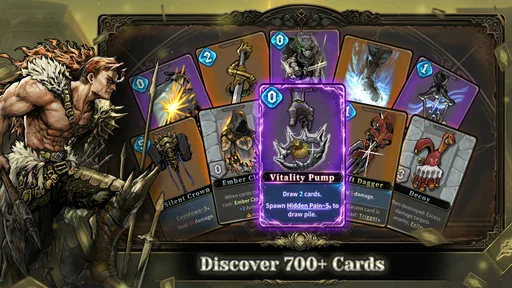

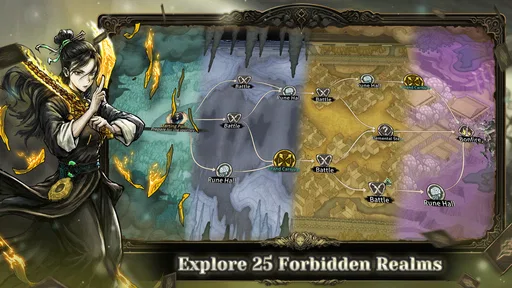
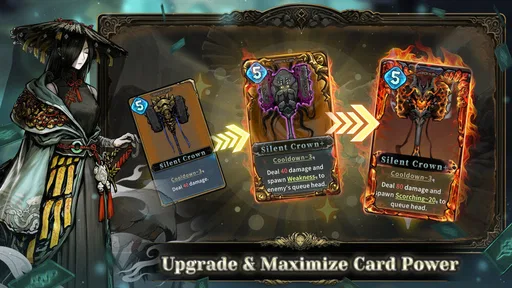
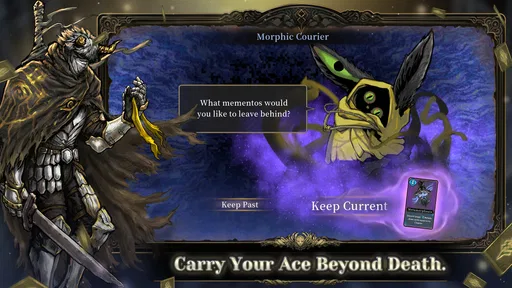
Our Review of Abyssal Soul - Card Roguelike
 Analysis by Appyee
Abyssal Soul is the kind of card game I would open when I want a focused strategy session rather than a quick tap-through distraction. It comes from ChillyRoom and combines deck-building with a roguelike structure, so each run asks me to make a series of decisions with imperfect information. The appeal is not simply collecting powerful cards; it is learning how to turn a limited set of options into a plan that can survive the next challenge.
That distinction matters on mobile. Many card games are built around short, repeatable matches, while a roguelike deck builder makes the whole route important. A choice that looks modest early on can shape the rest of a run. I found that rhythm more thoughtful than the usual alternatives, especially when I was willing to pause and consider whether a new card genuinely improved my deck or merely made it larger.
The game is free to start and carries an Everyone 10+ content rating. Its current version is 1.0.4, and it supports devices running Android 6.0 or later. That broad operating-system requirement makes it approachable for people who are not using a recent phone, although the actual experience will still depend on the hardware and how demanding a particular run becomes.
How the runs feel from the first decision to the last
I look at a run in Abyssal Soul as a chain of small choices rather than a race to assemble the biggest combo. This section follows that rhythm from the opening decision through the moments when a plan pays off—or has to change. It also considers how I decide whether to keep pushing or let a run end and start fresh.
A deliberate start instead of instant mastery
The first thing I noticed about this style of game is that speed does not mean rushing. Individual decisions can be quick, but the consequences encourage a slower pace. When I am choosing between improving immediate damage, preserving defensive options, or taking a card that may help a later combination, I want time to think. That makes the game feel responsive in the mental sense, even when a turn itself is simple.
The store summary describes a strategy deck builder built around card combinations, and that focus comes through in how I approach each run. I do not treat every card as an isolated tool. I look for relationships: cards that become more useful after a certain type of play, effects that support a narrow plan, and additions that help a weak opening hand become more consistent. The most satisfying moments come when a sequence feels earned rather than lucky.
For a new player, the main challenge is resisting the urge to accept every reward. More cards can mean more possibilities, but they can also make the deck less predictable. My practical advice is to ask whether a new card supports the direction already emerging in the run. If the answer is no, leaving a reward behind may be the stronger move. That is a small habit, but it changes the game from simple accumulation into actual deck management.
Why combination planning changes the pace
In a conventional card battler, I can often judge a card by its immediate value. Here, I pay more attention to timing and sequence. A card that seems average by itself may become important when it enables another play, while an impressive-looking effect may be awkward if it arrives too late or competes with the rest of the deck for the same opportunity.
This creates a useful tension between speed and reliability. I can build toward a dramatic combo, but a narrower deck may struggle when the right pieces do not appear together. A safer approach is to keep a dependable core and add only a few ambitious tools. I recommend this to anyone learning the game: first make the deck function regularly, then experiment with more specialized combinations once the basic flow feels comfortable.
That approach also helps during short sessions. If I only have a few minutes, I can still make meaningful progress through decisions without needing to chase a perfect strategy. If I have longer, the run gives me room to examine how early choices affect later encounters. The game therefore fits both a quick break and a more concentrated evening, although the latter is where its strategic character becomes clearest.
Heavy-use moments and what they ask from a phone
The most demanding moments are not necessarily the turns with the most cards on screen. They are the points where several choices arrive close together and I am evaluating a new reward, a route decision, and the direction of my deck at the same time. That is where the game feels busiest from a player’s perspective, because mental load rises even if the interface remains straightforward.
On a mobile device, I would expect the experience to feel best when the phone is not already struggling with many background tasks. Card games are usually less visually intense than action games, but a roguelike run still involves repeated transitions, animations, and state changes. I would not choose this as my first option for an older device with very limited free space or a battery already under strain, simply because longer sessions are more comfortable when the system has some breathing room.
A practical everyday scenario is a commute or a waiting room. I can begin a run, make a few careful choices, and stop when I reach a natural pause instead of needing a multiplayer opponent to remain available. For that use, I would keep the screen brightness moderate and avoid opening the game while the phone is already hot. Those are ordinary habits, but they make a noticeable difference to comfort during repeated sessions.
Players who expect instant, low-attention entertainment should know that the game may not suit that mood. Even when the controls are easy to understand, the decisions are not always disposable. If I play while distracted, I am more likely to dilute the deck or spend a useful option too early. A simpler casual card game is better when I want something I can play almost automatically.
Reliability, recovery, and the value of a stable run
Reliability matters more in a roguelike than in a single short match because a failed run represents accumulated decisions. I care about whether the game lets me return to the experience without making the whole process feel fragile. From a user’s point of view, the ideal session is one where the game remains predictable: selections register properly, transitions do not interrupt the flow, and returning after a pause feels straightforward.
I would still treat recovery as something to plan around rather than assume. Before closing the app during an important run, I prefer to reach a clear stopping point. That is especially sensible on a phone where incoming calls, system updates, or aggressive memory management can interrupt an application. This is not a criticism unique to Abyssal Soul; it is simply good practice for any game where progress is tied to a continuing run.
The game’s audience size suggests that it has found attention beyond a tiny experimental release. It has passed 100K+ installs and holds a 4.5 average from around 3.2K ratings. Those figures give me some confidence that the basic concept is connecting with players, but they do not replace personal testing on a particular device. A phone with the minimum supported operating system may launch the game while still offering a less comfortable experience than a newer model.
There are also 53 written reviews associated with the listing, which is a smaller pool than the rating count. I would read individual comments for clues about device-specific behavior rather than treating the average as a guarantee. For a game like this, consistency over a complete run matters more to me than a polished first few minutes.
Device constraints and the cost of playing comfortably
The Android requirement begins at version 6.0, which is helpful for users with older software. Still, operating-system compatibility is only the starting line. Available memory, storage, battery health, and the number of applications competing in the background all affect how pleasant a longer session feels. I would close unnecessary apps before a serious run, particularly on an older phone.
Screen size is another quiet consideration. A larger display can make card text and choices easier to inspect, while a compact phone may require more careful reading. That does not make the game unsuitable for smaller screens, but it can influence how quickly I make decisions. Since the strategy depends on understanding interactions rather than merely recognizing large visual targets, readability is part of performance from the player’s perspective.
The game is free, but it includes in-app purchases ranging from $0.49 to $99.99 per item. That range is important for anyone who prefers games with no spending pressure. I would approach the free entry as a chance to decide whether the core loop suits me before considering any purchase. A low-cost experiment is reasonable; a large purchase made before understanding the game’s long-term appeal is not something I would recommend.
Parents should also notice the Everyone 10+ rating. That makes the game broadly accessible, but it does not automatically make every purchase decision appropriate for every household. If a child uses the device, I would review the device’s purchase controls and agree on boundaries beforehand. The rating describes age suitability, not a personal budget or a preferred spending model.
What makes it different from ordinary card games
Compared with a basic solitaire-style game, Abyssal Soul asks for much more planning. Solitaire is often about arranging the current board as efficiently as possible, while this game’s deck-building layer makes earlier choices matter later. Compared with a traditional head-to-head card game, it appears better suited to solo experimentation, because the central challenge is refining a run rather than reading another person’s strategy in real time.
It also differs from a collectible card game in emphasis. Collectible games often revolve around expanding a permanent collection and preparing a fixed deck. A roguelike deck builder instead makes temporary decisions inside each run more important. That is ideal for me when I want to test ideas without spending a long time constructing a perfect loadout. It is less ideal if my favorite part of card gaming is owning a large library of cards and competing against other players.
The trade-off is that the roguelike format can feel less predictable than a carefully prepared deck. Sometimes a run develops around an unexpected opportunity rather than the plan I had in mind. I enjoy that improvisation, but players who want complete control may find it frustrating. The right mindset is to treat each run as a problem to solve, not as a guaranteed route to a specific build.
Three habits that improve the experience
My first useful habit is to judge consistency before spectacle. A smaller combination that appears regularly is often more valuable than a huge sequence that depends on several rare pieces. I look at whether the deck can still function when the ideal cards are not drawn. This keeps a promising run from collapsing because I chased one impressive idea too aggressively.
My second habit is to separate experimentation from commitment. When I discover a card interaction that looks interesting, I do not immediately rebuild everything around it. I test whether the deck can support the interaction while retaining a reliable fallback. This is especially useful for new players, because it turns failure into information rather than making every unsuccessful run feel wasted.
My third habit is to treat route choices as part of deck design. A reward is not automatically good just because it is powerful. I consider whether taking it will make future decisions harder, whether it competes with the deck’s current rhythm, and whether the run already has enough offensive or defensive tools. Thinking about the route and the deck together is one of the clearest ways to get more depth from the game.
A fourth tip is practical rather than strategic: play serious runs when the phone is cool and distractions are limited. A sudden interruption is more annoying when I am comparing several options or trying to remember the purpose of a carefully built sequence. Short, casual sessions are fine, but focused sessions make the game’s decision-making feel much fairer.
Who should play it, and who should skip it
I would recommend this card roguelike to players who enjoy experimenting, accepting imperfect choices, and learning from a run that did not go as planned. It is a good fit for someone who likes the idea of discovering combinations gradually rather than receiving a complete strategy immediately. The free entry also makes it easy to see whether the pace and decision density match personal taste.
I would be more cautious recommending it to someone who wants a purely relaxing card game with minimal reading or planning. It may also disappoint players whose priority is direct competition, a deep permanent collection, or fast reflex-based action. Those players may be happier with a multiplayer card battler, a conventional puzzle game, or an action title designed around immediate movement.
It is also not the best choice for a person who dislikes runs that can go in unexpected directions. The same uncertainty that gives the format replay value can feel like loss of control. I enjoy having to adapt, but I understand why someone might prefer a fixed campaign or a puzzle with one clearly defined solution.
My performance verdict after weighing the trade-offs
From a performance standpoint, I see Abyssal Soul as a game that should be judged by sustained comfort rather than by a quick launch alone. Its Android 6.0 minimum makes the potential audience broad, while the card-focused format should be more approachable for modest hardware than a graphically intensive action game. Even so, longer runs deserve a device with reasonable free resources, a readable screen, and enough battery for uninterrupted concentration.
The game’s strongest quality is the way it turns small card choices into a larger strategic story. I like that the best decision is not always the flashiest one, and I appreciate the tension between building a reliable deck and pursuing a more unusual combination. That gives the free version a meaningful reason to exist beyond a brief trial.
The main friction comes from the same design choice. Runs require attention, imperfect information can lead to setbacks, and the in-app purchase range means cautious players should set spending limits before playing regularly. I would also avoid presenting the game as a guaranteed lightweight experience on every supported phone; the operating-system requirement alone cannot promise identical responsiveness across devices.
Overall, Abyssal Soul is worth trying if you want a mobile card game where planning, adaptation, and deck discipline matter more than simply playing the strongest card available. ChillyRoom has chosen a format that rewards patience, and my advice is to begin slowly, keep early decks focused, and use the free access to decide whether the run-based rhythm suits you. If it does, the game can become a thoughtful companion for commutes and quiet breaks; if you want instant action or completely controlled deck construction, another card genre will probably serve you better.
Verdict
Strengths of Abyssal Soul - Card Roguelike
- Strategic card-building rewards careful planning and adaptable play.
- Runs are compact, making the game suitable for short mobile sessions.
- Distinct encounters keep each run feeling different and unpredictable.
- Progression encourages experimentation with varied deck combinations.
- Dark fantasy presentation creates a memorable atmosphere for the genre.
Limitations of Abyssal Soul - Card Roguelike
- Random card draws can make some battles feel unfair or frustrating.
- Later encounters may demand highly optimized decks to progress.
- Limited guidance can leave new players confused about advanced mechanics.
- Repeated runs may feel similar once familiar strategies become dominant.
- Some content or upgrades may be restricted by in-app purchases or ads.
Similar Picks in This Category
View All
Solitaire - Classic Card Games
MobilityWare4.6

UNO!™
Mattel163 Limited4.3

Spider Solitaire: Card Games
MobilityWare4.6

Solitaire.com - Classic Cards
Tripledot Studios Limited4.7

Plants vs. Zombies™ Heroes
ELECTRONIC ARTS4.1

Hearthstone
Blizzard Entertainment, Inc.4.1
Frequently Asked Questions
What is Abyssal Soul - Card Roguelike?
Abyssal Soul - Card Roguelike is a strategic deck-building game that combines turn-based card battles with roguelike progression. You explore dangerous encounters, build a stronger deck from the cards you collect, and make decisions that can affect the rest of your run. Each attempt is different, so success depends on planning, adapting to enemies, and using your limited resources carefully.
How does the gameplay work in Abyssal Soul - Card Roguelike?
The game revolves around choosing cards during battles to attack enemies, defend your character, apply effects, or improve future turns. Between encounters, you generally decide which path to follow, what rewards to accept, and how to prepare for increasingly difficult opponents. Since a failed run can reset much of your progress, every card choice and combat decision matters.
Is Abyssal Soul - Card Roguelike suitable for beginners?
Abyssal Soul - Card Roguelike can be enjoyed by newcomers, but it may require patience while you learn its mechanics. Early battles help explain the basic card system, yet understanding enemy patterns, deck balance, energy management, and useful combinations takes practice. Players unfamiliar with roguelike deck-builders should expect a learning period before consistently completing successful runs.
Does Abyssal Soul - Card Roguelike require an internet connection?
Whether an internet connection is needed may depend on the version and platform, so it is best to check the current store description before downloading. Core roguelike card gameplay is typically designed for individual sessions, but online access may still be required for updates, advertisements, cloud features, account services, or purchases. Offline availability should not be assumed without verification.
Is Abyssal Soul - Card Roguelike free to download, and are there in-app purchases?
The download model and available monetization can vary between Android and iOS versions. Before installing, review the official store listing to confirm whether the game is free, includes advertisements, or offers optional in-app purchases. Also check the purchase settings if children use the device. Optional spending should be considered carefully, especially in a game built around repeated attempts and progression.
Play our best games!


